> FAQ’s
Q: Where is the money coming from?
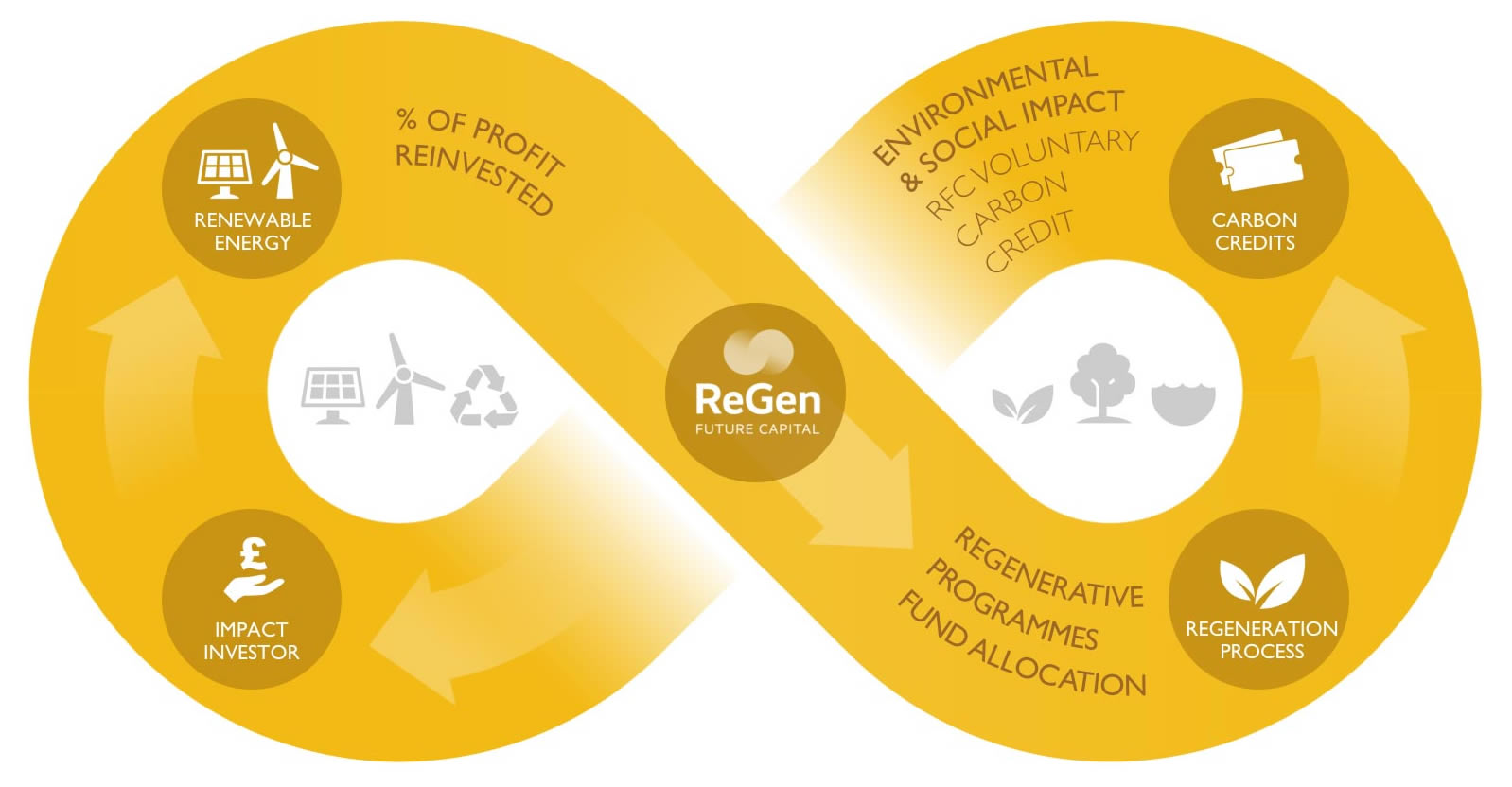
A: The money comes from returns on renewable energy investments. RFC works with impact investors to develop large renewable energy projects who commit to allow % returns to flow into ecosystem restoration. Restoring agricultural soils is a key ecosystem needing capital resources for the security of our food system and increased climate resilience..
Q: Is the funding a grant or a loan?
A: The upfront funding comes in the form of a grant which means it is not paid back by the farmer as long as they use the funding to implement the agreed upon regenerative farm plan. RFC will utilize carbon credit profits to pay back investors for the initial grant and then pay farmers for the carbon on a sliding scale over time. At the end of the partnership – farmers make a majority of the money from the carbon credits earned.
Q: What can you use the money for?
A: The money can be used for anything that supports the implantation of the plan and cover lost profits due to yield loss in the transition. Some examples may be new no-till equipment, trees/shrubs, new labor during transition, cover crop seed, etc. All use of funding dollars will be tracked annually and reported on.
Q: What is the soil testing protocol?
A: RFC will perform initial baseline soil sampling and ecosystem measurements. We have contracted professionals that will conduct 1m deep core carbon sampling, as well as, measure other soil functions such as water infiltration, bulk density, biological activity.
Q: How is carbon measured?
A: This is the million dollar question. There are currently multiple methodologies for measuring and modeling. RFC is participating in industry wide conversation around developing a standard that is internationally recognized for carbon sequestration on agricultural lands.
Q: What is the difference between RFC and NORI and Indigo?
A: RFC is an aggregator of acres wanting to transition into regen practices. RFC provides upfront capital for 10 years of modeled carbon drawdown. NORI and Indigo are carbon market places. This is where farmers and RFC can sell carbon credits to get a return for the initial funding.
Q: Does the partnership agreement lock farmers into a set price for carbon?
A: No, farmers get paid an agreed upon % of whatever the market carbon credit value is over the lifetime of the partnership ie. If the market value of carbon is $100/ton in year 15 the farmer gets $80 of that.
ReGen Future Capital LLP© 2020 All Rights Reserved